News

ETX 180 Field Trip Highlights Synchrotron Science and Metal Research

Students in ETX 180: Chemistry and Toxicology of Metals recently traveled to the Advanced Light Source (ALS) at Lawrence Berkeley National Laboratory to learn how cutting-edge synchrotron techniques are used to study metals in environmental and biological systems. During the visit, students toured three beamlines and met with scientists who use high-energy X-rays to investigate metal speciation in environmental samples, characterize metals in biological tissues, and determine the three-dimensional structures of proteins involved in metal transport and toxicity.

Learning by Doing: ETOX Students Investigate Water Quality in the UC Davis Arboretum

Over the past three consecutive quarters, first-year students in The Arboretum: A Living Laboratory, a Course-based Undergraduate Research Experience (CURE) co-instructed by Dr. Brett Poulin in the ETOX department, have used the UC Davis Arboretum waterway as a living laboratory for environmental research. Students collected and analyzed water quality data, learned field and laboratory techniques, and developed skills in data visualization and scientific communication.

Honoring the 2026 Environmental Toxicology Graduating Class

The Environmental Toxicology department celebrated our 2026 undergraduates in our annual spring event! Special recognition was given to Zap Perkins, recipient of the Outstanding Senior Award, for exceptional scholarship, leadership, and impactful research contributions in Dr. Poulin’s lab on selenium in fish. Michael Maslianka and Noel Corley were honored with Outstanding Performance awards for their academic excellence, deep engagement within the department, and impressive research accomplishments, including Noel’s research in Dr. Nguyen’s lab on electronic cigarettes.


Environmental Toxicology Brings Science Home at Picnic Day

The Department of Environmental Toxicology welcomed families, alumni, and community members during UC Davis Picnic Day, embracing this year’s theme, “The Journey Home: Destination Davis.” Visitors explored a hands-on scavenger hunt through a mock home environment, discovering hidden everyday toxicants and learning how environmental exposures shape human health. The department also showcased cutting-edge research on harmful chemicals and metals found in electronic cigarettes, highlighting emerging concerns about youth vaping and toxicant exposure. 


Toxicology center-stage at Davis Science Café

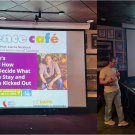
Dr. Sascha Nicklisch presents the lab’s research at the Davis Science Cafe as the first faculty speaker from the Department of Environmental Toxicology in the event’s 12-year history. He explains how environmental toxicants like DDT evade the body’s cellular defense proteins by acting as “molecular distractors,” binding to protective transporter proteins and keeping them occupied so other harmful chemicals can slip into cells undetected.

ETOX Adj. Professor Spencer Walse's research on the Spotted Lanternfly featured


Professor Dr. Spencer Walse (USDA ARS) and his team are on the forefront of finding ways to control the tiny eggs from the invasive species Spotted Lanternfly, which has inflicted serious damage to crops in the United States. His team has set up a Contained Research Facility for their studies on lanternflies, a secure facility where strict quarantine protocols are in place to study invasive plant pests, pathogens, weeds and other threats.

ETOX goes to SETAC!

Multiple research groups and students in ETOX attended the 2025 SETAC North America 46th Annual Meeting in Portland Oregon. Students presented on diverse projects such as pollution adaptation in wildlife, PFAS profiles in sediment, metals in California watersheds, spatial trends in toxicity, and more!